
GRAND PAWIKAN FEST
” The continuous existence or extinction of these Sea Turtles will depend on how well we understand its importance to our marine ecosystem. Let Montemar be your avenue to comprehend how these creatures exist, multiply and improve our lives and the world we live in. “
SEA TURTLE ADOPTION KIT
The PAWIKAN CONSERVATION PROJECT fights to protect endangered sea turtle populations in ways that meet the ecological needs of the sea turtles and the oceans and the needs of the local communities who share the beaches and waters with these gentle and beautiful creatures.
There are a wide variety of threats to the continued existence of the Pawikan or Marine Turtles, which is now teetering on the verge of extinction. You can help make the difference between extinction and recovery for the Pawikans!
Please join us in making the oceans safe for these creatures and other marine species as well.
ABOUT THE PAWIKANS…
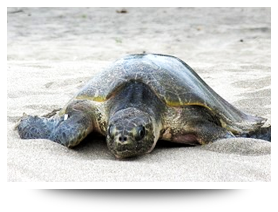
Marine turtles have seven (7) different species in the world and five (5) of which are known to be here in the Philippine waters. These animals are highly migratory in nature. They are internationally traded illegally like in our country due to its economic value. They are exploited in various forms starting from the eggs to the mature marine turtles. Their continued exploitation coupled with their very low survival rate (1%) pushed them to the brink of extinction. And internationally, (Convention Internationally Traded Endangered Species) they are all listed as endangered species while in our country, marine turtles are protected under Republic Act 9147 also known as Wildlife Conservation Act (March 19, 2001).
![]() |
![]() |
![]() |
|
Bagac and Morong, Bataan sandy beaches are long nesting beaches of the three (3) among the five (5) marine turtles found in the country. It is predominated by Olive Ridley (Lepidochelys olivacea), Green Turtle (Chelonia mydas) and Hawksbill Turtle (Erewtmochelys imbricata). In previous years, rampant selling of marine turtle eggs in the locality has been observed due to belief that it has an aphrodisiac effect. Poachers are encouraged to engage due to its price that ranges from PhP 8.00 to PhP 10.00 per piece. This also serves as additional livelihood for the marginal fishermen during the nesting season of marine turtles that usually starts during the month of October to February. |
![]() |
MONTEMAR’s efforts are conntinuous…help us promote and support our PAWIKAN CONSERVATION PROJECT
Why Care About Sea Turtles?
Much can be learned about the condition of the planet’s environment by looking at sea turtles. They have existed for over 100 million years, and they travel throughout the world’s oceans. Suddenly, however, they are struggling to survive — largely because of things people are doing to the planet’s oceans and beaches. But what does this mean for the human species?
It is possible that a world in which sea turtles can not survive may soon become a world in which humans struggle to survive. If, however, we learn from our mistakes and begin changing our behavior, there is still time to save sea turtles from extinction. In the process, we will be saving one of earth’s most mysterious and time-honored creatures. We might just be saving ourselves too.
![]() |
![]() |
![]() |
![]() ![]()
|
Major ecological effects of sea turtle extinctionSea turtles, especially green sea turtles, are one of the very few animals to eat sea grass. Like normal lawn grass, sea grass needs to be constantly cut short to be healthy and help it grow across the sea floor rather than just getting longer grass blades. Sea turtles and manatees act as grazing animals that cut the grass short and help maintain the health of the sea grass beds. Over the past decades, there has been a decline in sea grass beds. This decline may be linked to the lower numbers of sea turtles. Sea grass beds are important because they provide breeding and developmental grounds for many species of fish, shellfish, and crustaceans. Without sea grass beds, many marine species humans harvest would be lost, as would the lower levels of the food chain. The reactions could result in many more marine species being lost and eventually impacting humans. So if sea turtles go extinct, there would be a serious decline in sea grass beds and a decline in all other species dependant upon the grass beds for survival. All parts of an ecosystem are important, if you lose one, the rest will eventually follow. Beaches and dune systems do not get very many nutrients during the year so very little vegetation grows on the dunes and no vegetation grows on the beach itself. This is because sand does not hold nutrients very well. Sea turtles use beaches and the lower dunes to nest and lay their eggs. Sea turtles lay around 100 eggs in a nest and lay between 3 and 7 nests during the summer nesting season. For instance, along a 20 mile stretch of beach on the east coast of Florida sea turtles lay over 150,000 lbs of eggs in the sand. Not every nest will hatch, not every egg in a nest will hatch, and not all of the hatchlings in a nest will make it out of the nest. All the unhatched nests, eggs and trapped hatchlings are very good sources of nutrients for the dune vegetation, even the left over egg shells from hatched eggs provide some nutrients. Dune vegetation is able to grow and become stronger with the presence of nutrients from the turtle eggs. As the dune vegetation grow stronger and healthier, the health of the entire beach/dune ecosystem becomes better. Stronger vegetation and root systems help to hold the sand in the dunes and helps protect the beach from erosion. As the number of turtles declines, fewer eggs are laid in the beaches, providing less nutrients. If sea turtles were extinct, dune vegetation would lose a major source of nutrients and would not be as healthy and would not be strong enough to maintain the dunes, resulting in increased erosion. Once again, all parts of an ecosystem are important, if you lose one, the rest will eventually follow. Sea turtles are part of two ecosystems, the beach/dune system and the marine system. If sea turtles went extinct, both the marine and beach.dune ecosystems would be negatively affected. And since humans utilize the marine ecosystem as a natural resource for food and since humans utilize the beach/dune system for a wide variety of activities, a negative impact to these ecosystems would negatively affect humans. |
What You Can Do
It is through the support and efforts of individuals like you that we will keep the turtles here for generations to come. Whether you have 5 minutes to spare or 5 hours, there is always something you can do to help our campaigns to save the sea turtles. Here are a few suggestions:
1. Have the proper knowledge.
With the proper knowledge you have, you will understand the importance of conserving our marine ecosystems. With these simple actions you can do to help protect Pawikans or sea turtles.
2. Circulate the information.
Get your family, friends, and coworkers involved, using it as an opportunity to educate them about the threat to our oceans. Better yet, make them a part of Montemar’s Pawikan Conservation Project.
3. Become a member and adopt a turtle
There are many things each of us can do to help sea turtles survive. First, we must remember that we share the oceans and the beaches with many other species. Second, become informed about the things that are killing sea turtles or destroying their habitat. Elected officials and other leaders are making decisions on issues that affect sea turtles almost every day. As an informed citizen, you have the power to influence the outcome of these issues by making your voice heard. One way to keep informed about important issues is to support our efforts by acquiring our Pawikan Adoption Kit.
“For in the end we will conserve only what we love. We will love only what we understand. We will understand only what we are taught.” -B. Dioum
A major project of
MONTEMAR ECO-TOURISM INITIATIVE